
July 10, 2018
Final Revised Version
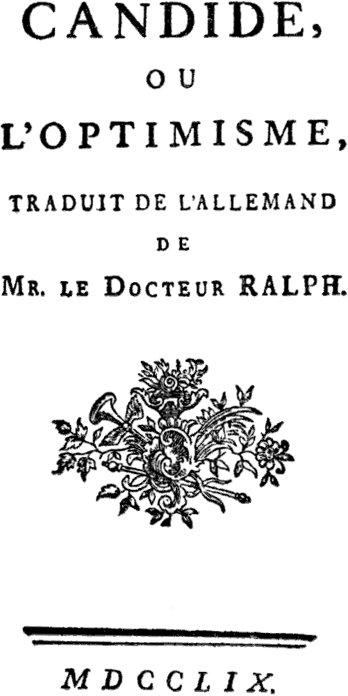 The other night we made our way to the Santa Fe Opera— the only opera I know of that features tailgate parties— for a tailgate dinner and “Candide,” music by Leonard Bernstein, book and lyrics by a rather complex and storied group of collaborators, all inspired (or not) by the short novel by “M. le Docteur Ralph”, which was one of Voltaire’s hundred-odd pen names.
All clear so far? It only gets more complex from here.
“Candide” originated not as an opera, but a Broadway show, originally conceived by Lillian Hellman as a play with music. Bernstein talked her into making a proper Broadway musical, and Hellman wrote the book while poet Richard Wilbur (mostly) wrote the lyrics. The original 1956 production was a horrific flop, though people generally liked the tunes. Bernstein plundered his own songs for “West Side Story,” which he wrote at more or less the same time.
Anyway, the play wouldn’t die, and kept undergoing rewrites and revivals. (Harold Prince revived it at least three times.) Hellman wouldn’t let anyone change her book, so the play got a brand-new book by Hugh Wheeler. Dorothy Parker, John Latouche, Stephen Sondheim, John Mauceri, and John Wells took a crack at the lyrics, along with Mr. and Mrs. Bernstein.
With each iteration, “Candide” became longer and more popular, and shifted from Broadway music to operetta to opera, depending on who’s doing it and with what degree of seriousness. It’s now one of the most popular musical entertainments out there.
What I saw was, I think, the “final revised version” of 1989, the only version where the composer revisited his own music.
What the “final revised version” shows, I think, is that it’s possible to have too much of a good thing.
The production clocks in at two and a half hours, which is just too damn long for a comedy, especially a picaresque. You could read Docteur Ralph’s novella faster than you could watch the stage production.
The music was light and sprightly, and the cast talented and attractive, Laurent Pelly’s direction was inventive, and by the end I was desperate to escape. I could find nothing particularly wrong with any of the scenes (except for “I Am Easily Assimilated,” which really belongs in a different play, perhaps about the Borg), but since the story’s a picaresque you can just drop a couple of the episodes, or drastically shorten them, and preferably reduce the number of characters while you’re at it, and end up with a perfectly delightful theatrical experience.
Or you could just buy a soundtrack album, and play it, and not be bored at all, because the music is terrific.
As an aside, I note that Voltaire is still getting ridiculous amount of credit for bravely using Candide to satirize the philosophy of Leibnitz. This was far from the bravest thing Voltaire ever did, since Leibnitz died shortly after Voltaire was born, and there’s nothing easier than satirizing the philosophy of your great-grandfather’s day. It would be like me taking a brave stand against the contentions of A.J. Ayer. If Voltaire had gone after David Hume, now that would have been a fight!
Reader responses
Comments
Be the first to respond.