
February 3, 2016
Genres Extinct
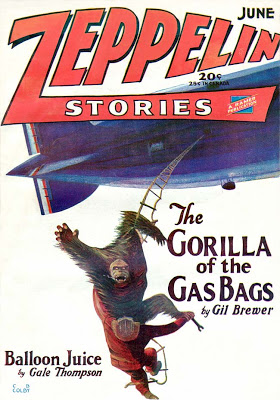 My recent post about Nevil Shute set me thinking about literary genres, and their rise and fall. Shute’s own particular niche is pretty well dead— not a lot of stories about zeppelins or epic aircraft flights being written these days. But Shute’s in good company.
For example, I think we can safely say that the Homeric epic is dead. At one point producing a long narrative poem was a writer’s best chance of getting a Nobel Prize, particularly if it could be considered a national epic, a poem defining the peculiar spirit or nature of a people. With so many new nations being created in the early 1900s, there was a demand for a lot of national epics, and regional poets answered the call. But nowadays I’m not sure authors like Bjørnstjerne Bjørnson, Carl Spitteler, and Władysław Reymont are much read outside their native countries. If there.
I think we can also safely state that the Gothic novel is dead, both in its original Castle of Otranto form and in the Victoria Holt-style popular romances of the mid-20th Century. I’m guessing that in an era of serial killers and terrorists, no one’s really scared of spooky old castles any more, and modern women have a lot more options than to sit around in a dusty mansion waiting for Uncle Silas to bump them off. Though Gothics occasionally reappear— Thomas Disch’s The Priest comes to mind— they tend to be pastiches, satires, or learned commentaries on their predecessors.
Other genres may be considered Lost— the Lost Race story and the Lost World story, both fading when all the empty spaces on the map got filled in, and when the Hollow Earth turned out to be full of lava.
The Dream Narrative (Dream of Scipio, Romance of the Rose) has been extinct for so long that most people don’t know it ever existed.
After-the-Bomb stories seem to be dead, though dystopian and post-apocalyptic fiction otherwise flourishes in non-radioactive environments. I’m guessing After-the-Bomb died of the combined effects of the end of the Cold War and the publicity given nuclear winter, where it became clear that the Bomb wouldn’t just clear away the annoying parts of civilization, like taxation and bureaucracy, to leave the world a place where Men could realize themselves as Real Men in a landscape strongly resembling the Old West (only with mutants), but would instead leave a world in which the Real Men got to starve to death in the freezing cold just like everyone else.
The only extinct genre that I actually miss is the one in which Nevil Shute excelled, and which was also inhabited by writers like Hammond Innes, Desmond Bagley, and the early Alastair Maclean (before he started writing to formula in anticipation of a movie deal). These stories features reasonably competent protagonists wrestling not only with some external conflict but with highly imperfect technology. Innes’ The Wreck of the Mary Deare, for example, deals with how two men alone can sail a derelict steamship. Bagley’s The Golden Keel has to do with smuggling carried on aboard a wind-powered yacht, and features many details about sailboats. Maclean’s South by Java Head is an open-boat adventure set in World War II, while The Guns of Navarone features mountaineering, explosives, and the Dodecanese Campaign.
Most of the works in this genre were some kind or other of thriller. (Shute’s weren’t.) The prototype would be Erskine Childers’ The Riddle of the Sands (1903), in which a couple of yachtsmen, investigating the Frisian Islands, discover the plans for a German invasion of England. While there is a thriller plot, and a damned good one, much of the novel is taken up with the details of navigating a small boat through sandbanks in the early 20th century, when there was no radio, no GPS, no motor, and a lot of fog.
As with other examples of Geek Fiction, whether these stories work or not strongly depends on the author’s skill at making the technical details interesting to a general reader. The stories mentioned above score pretty high in that regard.
But that whole style of novel faded away as technology changed. Two people navigating a modern ship might take up a few paragraphs, not a whole book. GPS, cell phones, text messaging, Google Earth, Google Maps, drone and satellite reconnaissance, and fly-by-wire technology have pretty much eliminated the imperfect, fallible machinery on which these stories were based. And while computer and IT technology is certainly imperfect and fallible, there’s not a lot of suspense in the details of installing a new mother board.
The genre could be resurrected, of course, but it would be a period piece, and would depend strongly on convincing a modern audience that there was a time, in the dim past, long before Facebook.
Reader responses
Comments
Be the first to respond.