
January 26, 2016
Mr. Norway
 Some of you may have noticed that I contributed to a discussion of hard vs. soft science fiction over at Tor.com.
One of the things I’ve noticed about so-called hard SF is that a lot of it isn’t all that hard— the science is often extremely speculative or sometimes even non-existent— but the label attaches anyway, because of the book’s attitude toward the science. The science, and the problems the science causes or solves, is front and center, and the characters have to work within a rigorous framework of science or technology in order to resolve the story.
As an example, my novel Metropolitan was called hard SF by some, even though the novel was fantasy and I completely made the science up. But I treated the fantasy elements as if they were real, and that sort of rigor convinced at least a few readers that I had some kind of postgraduate degree in Plasm Theory.
To me, that says that what hard SF deals with is process— and, to quote myself, “the story becomes not one of plot or character or setting—although ideally those are present as well—but a story in which the action is broken down into a series of technical problems to be solved.”
That sort of story is something I’ve decided to call Geek Fiction. I’m working on a kind of General Theory of Geek Fiction which I will present when I have the time, but right now I’d like to illustrate Geek Fiction through the works of a single author, one I happen to like a lot.
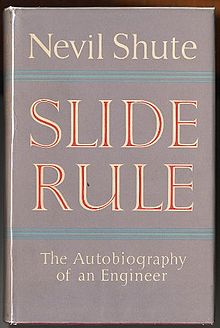
I refer to Nevil Shute, whose full name was Nevil Shute Norway. And who, by the way, had about the greatest job ever, because he designed zeppelins for a living. He was chief engineer of the R100, which was the British zeppelin that didn’t crash in a fiery explosion (that was the R101, designed by government committee).
Nevil Shute wrote the post-holocaust novel On the Beach, which I read during a period in which I compulsively read every post-holocaust novel I could find. (Nuclear annihilation was very much on my mind.) But I never read any of Shute’s other works until my sometime editor, John Douglas, introduced me to the rest of Shute a couple decades ago. I’ve been reading him off and on since. His works can be divided into two groups:
-
Stories in which competent people behave competently.
-
Stories in which ordinary people are caught in extraordinary situations, to which they respond with true British pluck. And competence.
The first category are perhaps the least interesting, though books like An Old Captivity and Most Secret serve well as illustrations to my thesis. The first is a novel that is largely about the technical difficulties of mounting an aerial photographic survey of Greenland in the 1930s, and the sheer amount of physical work that went into flying small craft into dangerous situations, without the use of any more modern navigational aids than a sextant. (The plane at least had a radio, though the antennae was a long wire that had to be hand-cranked in and out of the craft,) The second of these works is set in World War II, and involved an attempt to equip a French fishing boat with a giant flamethrower for use in destroying German warships. The technical details of the horrific weapon are laid out in detail, along with hair-raising examples of its use.
Shute’s engineering background helps make these stories plausible, and it’s to his credit as a writer that he can make these sorts of details interesting to readers who don’t happen to be engineers. (That’s the challenge of writing Geek Fiction— not that you have to define a problem, break it down into its component pieces, and rationally solve them; but that you have to make the process interesting to a reader who doesn’t have a degree in engineering.)
Shute saves his works from being mere slide-rule exercises by his gift for creating character, or at any rate a certain type of character— middle-class, educated, rational, and fundamentally decent. His characters possess feeling, but their emotions are restrained in ways typical of Englishmen of Shute’s generation.
And while his characters are rational and competent, they’re not the Nietzschean supermen of popular fiction. One of the protagonists of Most Secret suffers a breakdown as a result of trauma inflicted while burning fellow humans to death, and the protagonist of An Old Captivity also suffers a kind of breakdown, of which more later.
That essential humanity makes Shute’s characters sympathetic, that along with their fundamental middle-class British decency. They’re willing to contribute to a good cause, or help a town stranded in an economic desert, or fight Hitler in sometimes gruesome ways, but they don’t lose their fundamental selves in so doing.
My personal favorite in this category of Shute’s works is Trustee From the Toolroom, which I joyfully recommend to you all. The hero is Keith Stewart, a true geek, in fact a homebody who makes an extremely modest living crafting scale models and selling his designs to modeling magazines. Stewart’s sister and wealthy brother-in-law are lost when their yacht piles up on a reef in the Pacific, and he finds himself step-parent to his 10-year-old niece. The brother-in-law’s fortune has disappeared, and Stewart realizes that he’s converted it to gems and smuggled then away on his yacht, all to avoid postwar British restrictions on capital. Without the money, Stewart can’t possibly raise his niece in the upper-middle-class fashion to which she’s entitled, and so his problems become the following:
-
Somehow get to America
-
Cross the States
-
Cross the Pacific to Hawaii, and then Polynesia
-
Somehow get to the remote island where the wreck occurred
-
Perform some marine salvage on a wrecked, sunken yacht
-
Get a fortune in gems back to England in time to pay for his niece’s tuition
-
And do this all without any money!
And after dealing with his niece’s grieving by telling her to keep a stiff upper lip and not let her emotions run away with her, he does exactly that.
It’s utterly perfect Geek Fiction, with a long list of problems to solve, a sympathetic character to solve them, and a lot of interesting characters and scenery along the way. There’s no stopping to deal with unpleasant, untidy emotions, such as a ten-year-old’s mourning for her parents, because there’s a long list of things to do that are more important, and besides the wife can handle all that, possibly by brewing up a pot of tea.
The second category of Shute’s fiction— that of ordinary people caught up in world-changing events, and responding by evoking rational middle-class virtues— produces stories that are, on the whole, more interesting.
Possibly the most fun of these is Pied Piper (1942), in which a 70-year-old Englishman, on a fishing holiday in France, is caught up in the German invasion of 1940. He reluctantly agrees to escort two small English children home, but one of them falls ill and delays the journey. The Germans advance, and the protagonist keeps somehow acquiring more refugee children while dodging enemy troops, until eventually his problem isn’t getting two kids out of a country that’s being invaded, but smuggling seven children out of a country that’s already been occupied. And oh yes, he doesn’t speak French, and can’t pass for a Frenchman. He’s just this old English guy wandering around a war zone with a pack of kids.
It’s a perfect little book, in which the hero’s problem keeps getting more complicated as the story advances, and the perils just keep getting more perilous.
(As an aside, Shute’s World War II fiction was all written during the war, at night in his spare time, with the Blitz exploding around him. The issues of the war were far from settled, and it was far from clear which side would win. It’s probably best to read these stories with that in mind.
(Also, during the war his day job was basically with the Department of Weird Weapons. I don’t know any of the details, but I do wonder if the flamethrowing fishing boat was something he tried to bring into being.)
Another story in this category (Ordinary People/Big Doin’s) would be On the Beach, which presents the characters with a serious problem for which there is no solution. No one can survive the radioactive cloud descending on the protagonists, and so it turns out to be a story in which they attempt to hold onto their values and decency essentially for their own sake, and not because it will resolve anything or make the world better.
A further example would be What Happened to the Corbetts (US title: Ordeal), published just ahead of World War II. The book could be described as a near-future SF novel, in which the middle-class Corbetts find themselves caught in an aerial bombing campaign by an unnamed foreign power (Germany from context). Thanks to a plausible science fiction device, the attackers are able to bomb accurately through clouds and bad weather, and bad morale and cholera soon threaten social stability. The book was considered prophetic enough on publication that the British government bought 1000 copies for distribution to air-raid wardens, to let them know what to expect. (Luckily for Britain, none of Shute’s more depressing predictions came true.)
These last two works bring up Shute’s willingness to deal with some of the stuff of science fiction. Shute’s science fiction falls into a near future category, the “if this goes on” school of prediction. No Highway (1948) presciently raises the then-brand-new issue of metal fatigue in jet aircraft. (Designers of the Comet, alas, did not read the book.) In the Wet, published in 1953, features a flash-forward to the Britain of 1983, where the dual threats of Socialism and Anti-Monarchism are examined and condemned.
(His prognostications are wide of the mark. Shute, like a great many in his class, was deeply offended by the notion that he would be asked to help pay for the war, for looking after the casualties, for rebuilding, and for improving the prospects of the working classes, who were by that point no longer tugging their forelocks as respectfully as once they had. The rise of the working class was viewed not as a direct threat not to the Establishment, but to the security of the middle classes. And of course if Shute got a look at today’s royal family, I expect he would have had that fatal stroke all over again.)
Shute was also willing to write about metaphysics and the paranormal. When the protagonist of An Old Captivity has his breakdown, he recalls a past life in which he and the book’s heroine were Irish slaves of none other than Leif Eriksson, and he is able to guide the others to Vinland the Good (which turns out to be Cape Cod). It’s an odd turn for an otherwise realistic novel.
Reincarnation is also an element in In the Wet, and Round the Bend features an aircraft mechanic of mixed race who founds a religion, and who may be divine.
Round the Bend is also an attack on racism, as is The Chequerboard, which depicts the segregated U.S. military. It should be noted that while Shute’s view of race was extremely progressive for a white Englishman of the mid-twentieth century, it looks a little odd now. The narrator of Round the Bend employs mostly “asiatics” in his air service, and pays them well. He gets angry when they’re not permitted into all-white Australia, but he unselfconsciously pays them a quarter what he’d pay a European. While Shute condemns segregation in the U.S. military, he accepts the de facto segregation in rural Australia, where the protagonists of his much-admired A Town Like Alice refer to Aborigines as “boongs,” (nowadays at least a deeply offensive term), and where his heroine opens a whites-only ice cream parlor. (Aborigines eventually get their own ice cream parlor in the back, where they are served by an aboriginal hostess so a white women won’t have the distasteful duty.)
Which is all by way of saying that for all of Shute’s essential decency and humanity, he is unable to entirely escape his own time and place. He did his level best to point out wrongs where he saw them, and if he didn’t have the benefit of a 21st Century perspective on all of it, a modern reader shouldn’t be surprise.
As a science fiction reader, I’m used to writers getting the future wrong or simply skewed in an odd way. Picking the wrong trends to to project into the future is a professional hazard. (I just may have done this myself.) And I’m also used at home with the essential geekiness of Shute’s novels, and the rationality and calculation that occupy the protagonists’ minds as they work their way, step by step, through the problems that Shute has set before them.
Shute’s books are rational, but it’s rationality branded with decency and compassion. What more do you want in your future?
Reader responses
Comments
Be the first to respond.