
March 24, 2016
Protagonists
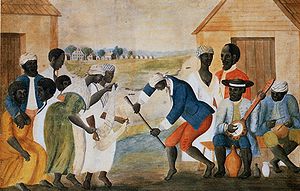 So I was talking to an acquaintance whose family hails from Tennessee. He said, “In my family we used to be embarrassed that the Yankees came and took away our plantation. But now what’s embarrassing is that we had a plantation in the first place.”
Which is enlightened self-knowledge, if you ask me.
And which further brings to mind a question I asked at a panel at Boskone, a month ago. We were talking about protagonists, I think, and who or what could be heroes, and I asked, “Can you have a Southern slaveholder as a protagonist any longer, knowing what we now know about slavery? Wouldn’t a reader think, ‘Oh! A rapist! And if he’s not, his friends certainly are.'”
Thirty years ago it was certainly possibly to have a plantation owner as a protagonist— in fact I once planned it myself, and would have written that story if my Privateers and Gentlemen series hadn’t been brought to a premature end. I had gone to some length, at the end of Cat Island, to explain why one branch of my fictional Markham family had ended up in Mississippi, just so that I could eventually have point-of-view characters on both sides of the Civil War.
Of course I wasn’t going to make my plantation owner right in his defense of slavery. I don’t think anyone’s made that argument in fiction for a very long time. But it was still possible to have the character be wrong, and still be honorable and honest in defense of his views.
(My character was going to be a colossal egoist who viewed himself as enlightened. He was the sort of slaveowner who viewed the slaves as extended family, and would never order them to do dangerous work— of course he’d hire an Irish immigrant for that!)
I’m not sure that sort of protagonist is possible any longer, any more than you can have a protagonist be an SS camp commandant or an al Qaeda terrorist. Sure, you can have them be the central character in your book, to dissect the alien mindset or whatever, but in order to be a protagonist, the character has to protag. He’s got to engage the reader’s sympathy somehow, and I wonder how much sympathy a slaveowner can generate.
However, I have to ask myself this: does this mean George Washington isn’t a hero anymore? Or Jefferson, Madison, Light-Horse Harry Lee? Benjamin Franklin, who speculated in slaves but wasn’t as invested in the system as a planter?
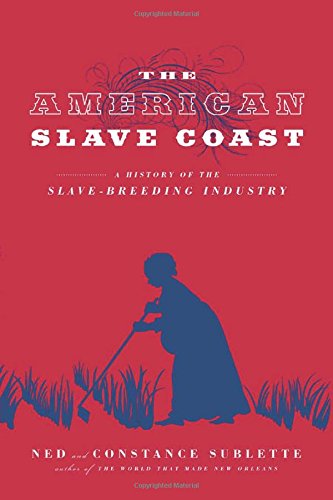 Complex characters are a sine qua non of serious fiction, and you can’t say that these characters, and their historical circumstances, were not complex. Washington and Jefferson thought very seriously about slavery and its conditions. Washington was a strict master, apparently, very much in the style of a military man— though he tried also to be humane, and wouldn’t sell a slave without his permission. Jefferson obsessively kept records about his slaves, the way he kept records about everything else, but he found personal contact with his human property distressing, and kept his property at bay by surrounding himself with the Hemings family, who were at once his in-laws, children, and property.
Neither were able to make slavery work for them, and came to different conclusions. Washington freed all the slaves he personally owned, albeit after he’d died, while Jefferson kept spending lavishly, died terribly in debt, and let his descendants bear the consequences. And his slaves, who probably had their families broken up as they were sold to pay the great man’s debts.
So there is your plausible protagonist, I think. Someone who is all too aware of the system’s evils, but is nevertheless trapped in his world and time. Joseph Davis, the older brother of the Confederate president, might serve as one model for this kind of character: he was a convert to socialism, and tried to run his 5000-acre plantation as a kind of model commune— and after the Civil War, sold the whole shebang to Benjamin Montgomery, one of his freed slaves. (Mind you, Montgomery was freed by the Union Army, not by Joseph.)
Being a member of the planter class was something you were born into. That wasn’t your fault; but of course it might be your fault if you remained in the planter class and participated in its abuses. Or if you weren’t born into it, but aspired to it, or served it in some particularly vicious way— as a slave-dealer, for example.
But of course it wasn’t just American Southerners who owned slaves. The planters chose as their models the heroes of the classical age: Julius Caesar, Cato, Pericles, Cicero, and just about every other prominent person well into the Middle Ages (after which they didn’t have slaves, but merely serfs). Slaves in the ancient world were given more opportunities for freedom than African slaves in the States, and they were probably spared a good deal of the racism; but when all was said and done, slavery in the ancient world could get as bad as slavery anywhere. Plus there was a chance, depending on where you lived, of being turned into a eunuch.
If a Southern slaveholder can’t be a protagonist, what about these guys? Caesar was a hero to most of Rome, but he killed a million Gauls and enslaved another million or more. Compared to all that, Andrew Jackson was a piker. There was a reason Spartacus and the slaves rose in revolt.
In the ancient world, of course, there were no alternatives. There were no leagues for abolition in Athens or Babylon, there were no free states for slaves to run to; and while there were liberal politicians like Caesar or Pericles, they were interested in promoting the interests of middle-class slave-owning citizens, not slaves. Literacy and the knowledge it brought was the possession of a very small class, and they were going to run things no matter what.
Of course part of the attraction of writing about the ancient world is all the elevated conversation mixed with the extreme cruelty, the enlightened proconsul who fights the forces of reaction back home, and crucifies his foreign enemies on a battlefield. That’s a character worthy of a great book (and probably a thousand mediocre ones).
But can you write a slave-owning protagonist and not deal in some way with the system that produced both him and the servants who bathe him, dress him, and take care of his sexual needs? I’m thinking not.
Of course the ancient world also has the advantage of distance. We don’t have people in our present muttering that things would be a lot better if we could get back to the days of Cato the Elder, whereas nostalgia for the Lost Cause is still strong in certain quarters of the U.S.
We know more than we did, because we’re not obliged to be discreet anymore, and the stories that I (for one) grew up with are now shown to be untrue, or at least incomplete. I can’t write about the same kind of protagonists that I could write about thirty years ago.
Is that enlightened self-knowledge? Maybe not, but at least it means I’ve learned a thing or two.
Reader responses
Comments
Be the first to respond.