
March 28, 2017
Random Acts of Violence
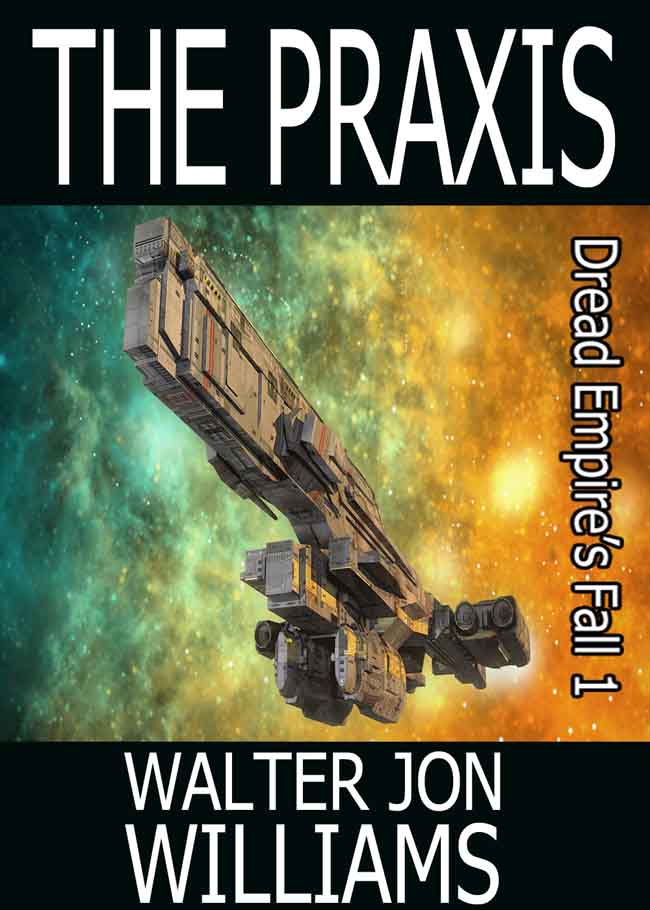
 I’m working on the new Praxis book, and by way of getting in the mood, I’ve been reading a pack of novels about the Second World War.
Not that anything I’m writing about will in any way resemble the Second World War. I’m really not interested in “World War II in Space” novels, of which there are more than a few. If I want the Second World War, I’ll read novels about the Second World War and cut out the middle man, along with a whole lot of dumb rationalizations for why hitting the beach on Titan is just like hitting the beach on Iwo Jima.
Now I know the Praxis books have been described as “the Napoleonic-era navy in space,” but the people who say that don’t actually know anything about the Napoleonic-era navy, or anyway nothing more than they can learn by reading Patrick O’Brian novels. It was once my job to know all about the Napoleonic-era navy, and I damn well made sure that the Fleet in the Praxis books is quite clearly not Nelson’s navy. It’s its own thing, with its own history and doctrine and tactics that are based on weapons that are very far from carronades and boarding pikes.
The Praxis books have also been described as military SF, but that’s not quite what I intended. I didn’t want to write military fiction, I wanted to write fiction about people who happened to be in the military. Which is the difference between James Jones, say, and Bernard Cornwell. There’s nothing wrong with either of these gents, but I view my own work as being more in Jones’ camp. (Not that I write like him in any other way, mind you.)
But I’m wandering rather far from my topic, which is my recent reading. I’ve been reading World War II naval fiction, not because I want to rewrite World War II, but because I want to absorb little bits of atmosphere and detail that can only be imparted by those who were there, details that might hold as true for a far-future ship as for one in 1942.
So I’ve been mostly reading stuff by World War II vets who became writers, like Ronald Bassett, Philip McCutchan, and the very early Alastair MacLean of HMS Ulysses, though I’ve also been reading works by more contemporary writers dealing with period material. And I’ve noticed one big difference between them:
There’s a completely different attitude toward death.
In the veterans’ work, death is completely random and completely arbitrary. Anyone can die at any time. People die for no damn reason at all.
Whereas in the more contemporary writers, death occurs when it is necessary for the plot.
In the latter, a ship’s captain might die in order that a subordinate might rise to command and demonstrate his genius in defeating the enemy.
Whereas in the veterans’ work, a ship’s captain might die in some horribly pointless way, only to have his replacement discover that his situation is still hopeless, that he’s still out of options, and basically he’s just as fucked as the last guy, and there’s nothing he can do about it except soldier on and hope for the best.
Alastair MacLean even demonstrated his method for killing off his characters in HMS Ulysses.
I drew a cross square, lines down representing the characters, lines across representing chapters 1-15. Most of the characters died, in fact only one survived the book, but when I came to the end the graph looked somewhat lopsided, there were too many people dying in the first, fifth and tenth chapters so I had to rewrite it, giving an even dying space throughout. I suppose it sounds cold blooded and calculated, but that’s the way I did it.
Giving an even dying space throughout. Let it not be said these books are without art.
Characters in the veterans’ stories survive because (1) they won’t give up, and (2) they’re very, very lucky. They may or may not be gifted commanders, but that hardly matters, because they hardly ever have a good choice to make— they’re put in peril by circumstance, or usually by their superiors, who leave them with very few options, mostly between one horrible decision and another, perhaps slightly less horrible decision. (Decision #1— everybody dies. Decision #2— only 90% of us die.)
The whole point of a fight against hopeless odds, I remind, is that it’s hopeless.
This is one of the realizations that prompted the way the Praxis books turned out. After reading a lot of history and historical fiction, and hearing a lot of war stories from folks who were on the tip of the spear, I realized that it wasn’t so much the enemy you had to worry about as your own superiors. If you were stuck in some hopeless situation, odds are you didn’t get get there on your own, there was some inbred halfwit of a superior officer, most likely a graduate of a military academy, who ordered you into peril. Martinez and Sula therefore spend a lot of time trying to mitigate their superiors’ incompetence, and maybe that’s the most realistic thing about the series.
It has to be admitted that the more modern novels produce a somewhat more satisfactory reading experience. They’re better writers than those self-taught vets, for one thing, but mainly it’s because the stories they tell are closer to what readers want. Readers want the bright up-and-coming heroes to succeed and be rewarded, and not to be shredded into paste by some completely random act of industrialized violence.
So I’ll be keeping all this in mind when I’m working on the Praxis reboot. I’m not sure how these lessons can actually play out against the story I’m trying to tell, because one of the other things I’m trying to do is not call up too restrictive a historical template. If it looks too much like World War II, or the Napoleonic Wars, then I’ve failed.
So on I go, steaming on into peril. But the difference between me and my heroes is the level of risk. The worst that will happen to me is bad reviews.
Reader responses
Comments
Be the first to respond.