
March 30, 2016
Reviews Too Late: The Heavy Water War
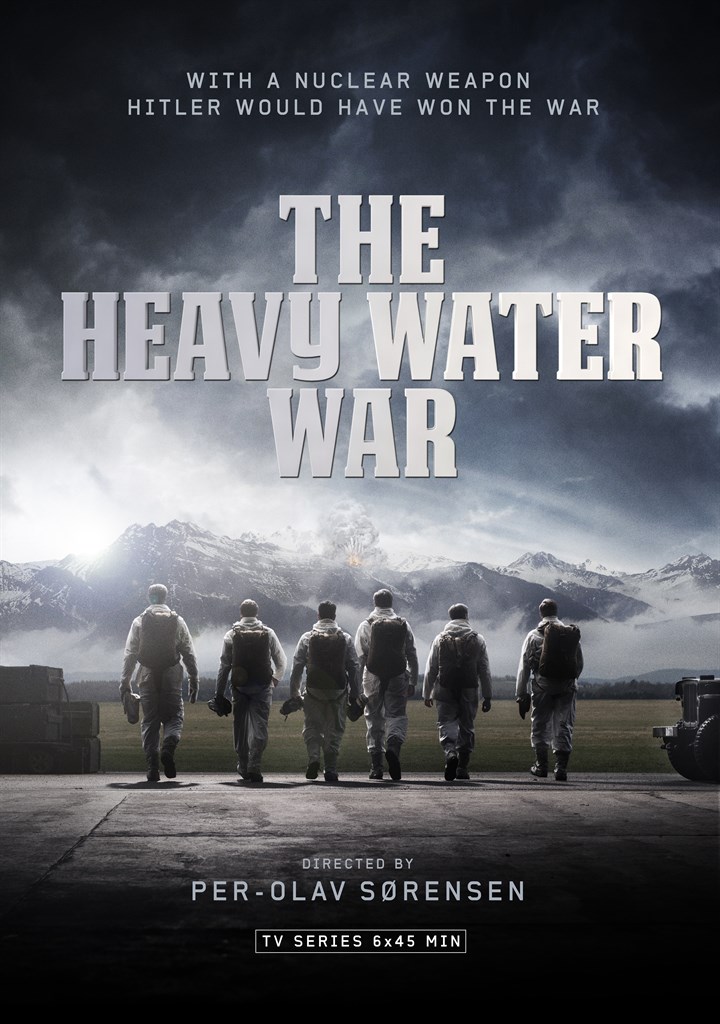 The Heavy Water War (UK title: The Saboteurs), streamable on Netflix, is a six-episode Norwegian television production that tells a number of parallel stories: that of the Nazi nuclear program, the British and Norwegian saboteurs who tried to stop it, and the management of Norsk Hydro, the company who owned the heavy-water plant at the center of the story.
It’s unusually authentic for a historical project, as good as Band of Brothers in that regard. Some characters are composites, but the composite characters allow us to follow the story more easily, instead of swapping the historical personalities in and out to the confusion of everybody.
The German research program is shown through the eyes of Werner Heisenberg, who continues to press for nuclear energy to power the future, and views the creation of a bomb as (1) a nuisance, and (2) a necessary means to a glorious end.
Everyone in Heisenberg’s life— Nils Bohr, other scientists, his wife— keep telling him that he needs to flee this project, if not Germany itself, but he continues doggedly with his researches in expectation of the Norwegian heavy water that will allow him to produce the favorable results that the military demands.
The heavy water is a side effect of an industrial process at a power plant in Rjukan, a power plant owned by Norsk Hydro, which— as the film tells us— is an industrial and energy concern with a budget greater than that of the Norwegian government itself. The company directors, when their country was occupied, set out on a course so cautious and conservative that it might as well have been called collaboration.
The ambiguities of the Rjukan plant director are well examined— living in princely splendor with his wife in a manse adjacent to the plant, completely isolated from normal human contact but with enormous power over his employees and their families. The sacrifice of an occasional victim to the Germans seems to have been part of the job.
(When he sees the Germans have lost the war, the director contrives to get himself arrested by the Krauts, so that on his release he becomes a hero of the Resistance rather than a despised collaborator, and lives happily ever after. No one ever said he wasn’t smart.)
The series goes into great detail concerning the various operations directed against the plant— possibly too much detail for most viewers. The scientist and commando Leif Tronstadt mounted no less than four operations against the plant:
Operation Grouse, in which a four-man team was sent to scout the area, and ended up stranded for months in a frozen mountain cabin, starving and eating boiled grass.
Operation Freshman, in which the saboteurs were wiped out to the last man without accomplishing their mission.
Operation Gunnerside, in which six saboteurs were dropped to rendezvous with the Grouse group. The two groups succeeded in sneaking into the plant at night and blowing up the heavy water operation, though this resulted in the Germans deciding to move all the equipment and heavy water to Germany, which resulted in the fourth operation, the
SF Hydro Sabotage, in which the ferry containing the heavy water was sunk in the middle of a lake, killing numerous civilians but dealing a colossal blow to Heisenberg’s program.
There were also a series of American bombing raids, which killed lots of Norwegians but didn’t materially affect heavy water production.
The series goes into considerable detail about these various schemes, and if you’re not really the sort to dig these kinds of details, you might prefer the 1960s film Heroes of Telemark, in which all the allied personnel are combined into the glorious person of Kirk Douglas, and the action much compressed.
The series also stars the gorgeous Norwegian scenery, hours and hours of it. It’s not the least reason to watch.
I rate it four and a half Lugers. Give it a shot.
Reader responses
Comments
Be the first to respond.